

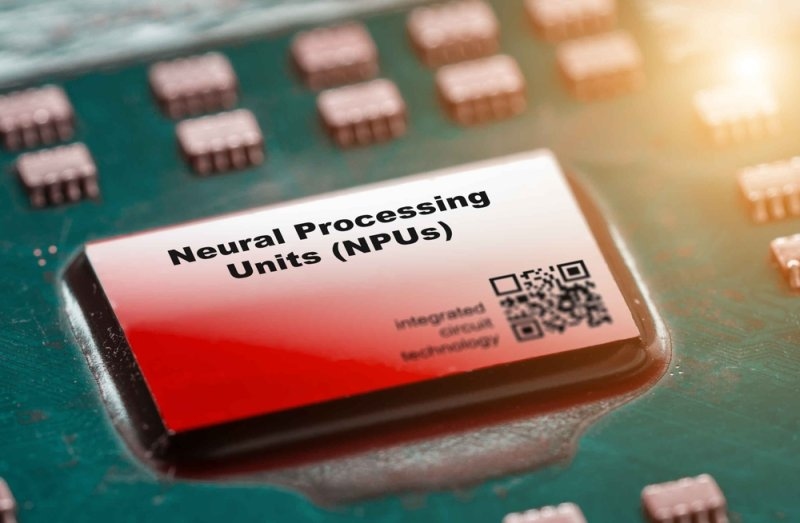
AI is changing the way modern gadgets use AI (Artificial Intelligence). The concept has touched every aspect of digital gadgets, from smartphones to PCs & then beyond, on the back of applications, intelligent software & services.
The key ingredient here is the Neural Processing Unit-the specialized element that tackles complex computations at a blazing fast pace as compared to an average CPU & yet with far better energy efficiency & without reliance on the cloud. Let us dive into "How NPU works" and how it’s helping in the evolution of smart gadgets.
NPU is essentially a co-processor or integrated specialized piece of hardware that is specifically built to address artificial intelligence and machine learning (AI/ML) requirements. Think of it not like any common PC hardware, such as a CPU (that handles general computation) or a GPU (that deals with graphics).
Instead, an NPU focuses solely on solving computations relevant to neural networks & it goes without saying that this is what makes them more competent for tasks related to artificial intelligence and machine learning.
The massive adoption of features that rely on smart technology, such as voice controls, image analysis, and text translations, has fuelled the requirement for smarter hardware. And a Neural Processing Unit fits this requirement, not just for enabling those features, but also for doing so quickly & with improved privacy, since this work is mostly processed on the device itself instead of being sent back and forth to servers.
Recommended Blog: Future of Desktop PCs and Redefining Performance and Design
The working principle of the Neural Processing Unit can be understood by looking into how an AI-based algorithm processes data. Neural Networks for AI consist of repeated mathematical calculations over massive amounts of data. The hardware architecture of an NPU is such that it specializes in crunching all those complex mathematical operations required during the process.
Via Efficient local processing by NPUs. Several tasks that the Artificial Intelligence system does- like voice recognition, face & object detection, scene analysis, and many more rely on processing these neural networks at great speeds without latency issues that can come when data is sent outside to be processed (on-device processing).
The Neural Processing Unit assists modern devices to not only perform those calculations without highLatency butalso helps save power.
Modern computing systems are more like an ecosystem than just a computer; a complete suite of processor components that are made to serve specific jobs. An AI processor usually combines components that have expertise in solving a specific set of tasks.
Typically, it entails a CPU, GPU, and a specialized Neural Processing Unit NPU. CPU technology carries out all the standard computation tasks, the GPU optimizes visual computation, whereas the Neural Processing Unit specifically handles neural network computation-related tasks.
There are many important advantages of Neural Processing Units (NPUs). Some of the most useful benefits include:
A desktop AI chip with an integrated NPU will help computers process local AI tasks more efficiently and faster. It can have a huge role in making modern PCs intelligent that will process data with local intelligence, enabling some really advance task such as automatic editing of photos and videos, auto-content generation, real time machine based translate and so on, and this will obviously have a great influence on enhancing our overall experience with our Computers.
AI hardware that utilizes the intelligence of the neural engine, or specialized accelerators, is what the technology relies upon now. This has helped improve on-device machine learning capabilities. Technologies based on the neural engine help in faster speech recognition, object identification, and image quality improvement.
As the usage of AI-based applications goes up in the near future, it will be instrumental to leverage and develop faster AI-based hardware.
The neural processing unit serves as specialized and critical hardware that helps AI processors to compute intelligently and accurately. Its optimized capabilities make AI tasks perform faster than a normal computer and utilize minimal power.
The ever-evolving technological landscape, which sees increased utilization of AI tasks, makes a neural engine and AI hardware important, thus giving the Neural Processing unit its deserved standing in enabling the future.
An NPU is different from other processors because an NPU is made specifically for doing artificial intelligence work. While CPUs process general requests, and graphics and parallel operations are processed by the graphics processing unit(GPUs), NPUs handle all of the neural network calculations needed to perform AI tasks.
Yes, a large majority of things an NPU can do without needing to send data to the cloud. That is why many features that you can use to rely on your devices powered by NPUs often operate instantaneously, thus saving you on processing time and protecting your privacy.
Devices with NPs are hot right now because the expectations for artificial intelligence have significantly increased for both consumer devices and industrial machinery. They enable the device to run intelligence-based smart applications more efficiently, save power, and optimize performance in devices.
No, NPUs are also employed in many other devices, such as smartphones, tablets, laptop devices, and Internet of Things IoT devices. The NPU supports intelligent capabilities like camera enhancements, voice identification, increased security, and even personalized content delivery in both platforms.
NPUs may never remove standard computers and graphics chips. They collaborate with, but rather complement, a device's traditionalCPUS and CPUs processors that improve device efficiency without any loss.
This content was created by AI